- Jul 4
“I’m Constantly Angry.” “I Just Can’t Do Conflict.” — What If That’s Not Actually Who You Are?
- Dee Kinsey
- Nervous System Education
- 0 comments
What If It's Not Who You Are?
People often arrive carrying a story about themselves.
"I'm constantly angry. I don't know why I can't just let things go."
"I'm just high energy. Always have been."
"I can't do conflict. I just leave. That's how I've always handled it."
"I need to make sure everyone else is okay. That's just how I am."
"I'm just not an emotional person."
Many have carried these stories for years. Sometimes decades.

And most have spent a significant amount of time trying to change the behavior the story describes—with varying degrees of success and a familiar undercurrent of frustration when it doesn't last.
What if we started with a different question?
What if the story isn't true?
What if what you've been calling your personality isn't actually your personality?
What if these reactions have never been about who you are at all?
What Is Actually Happening When You React?
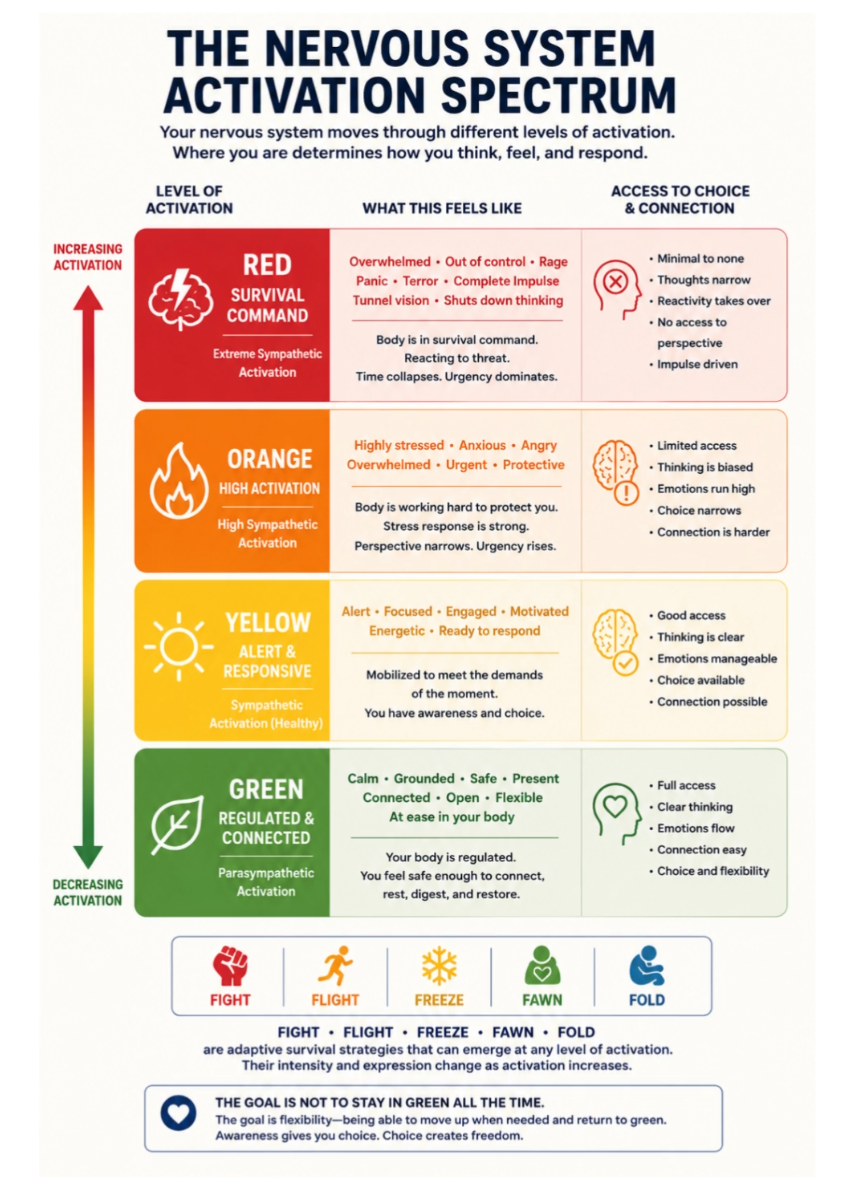
One of the most important things to understand about the nervous system is that it responds before conscious thought enters the picture.
Before you've had time to think about what's happening.
Before you've decided what you believe about it.
Before you've chosen how you want to respond.
Your nervous system has already begun evaluating the moment. It is constantly scanning for cues of safety and threat, comparing what is happening now to everything it has learned from the experiences that came before.
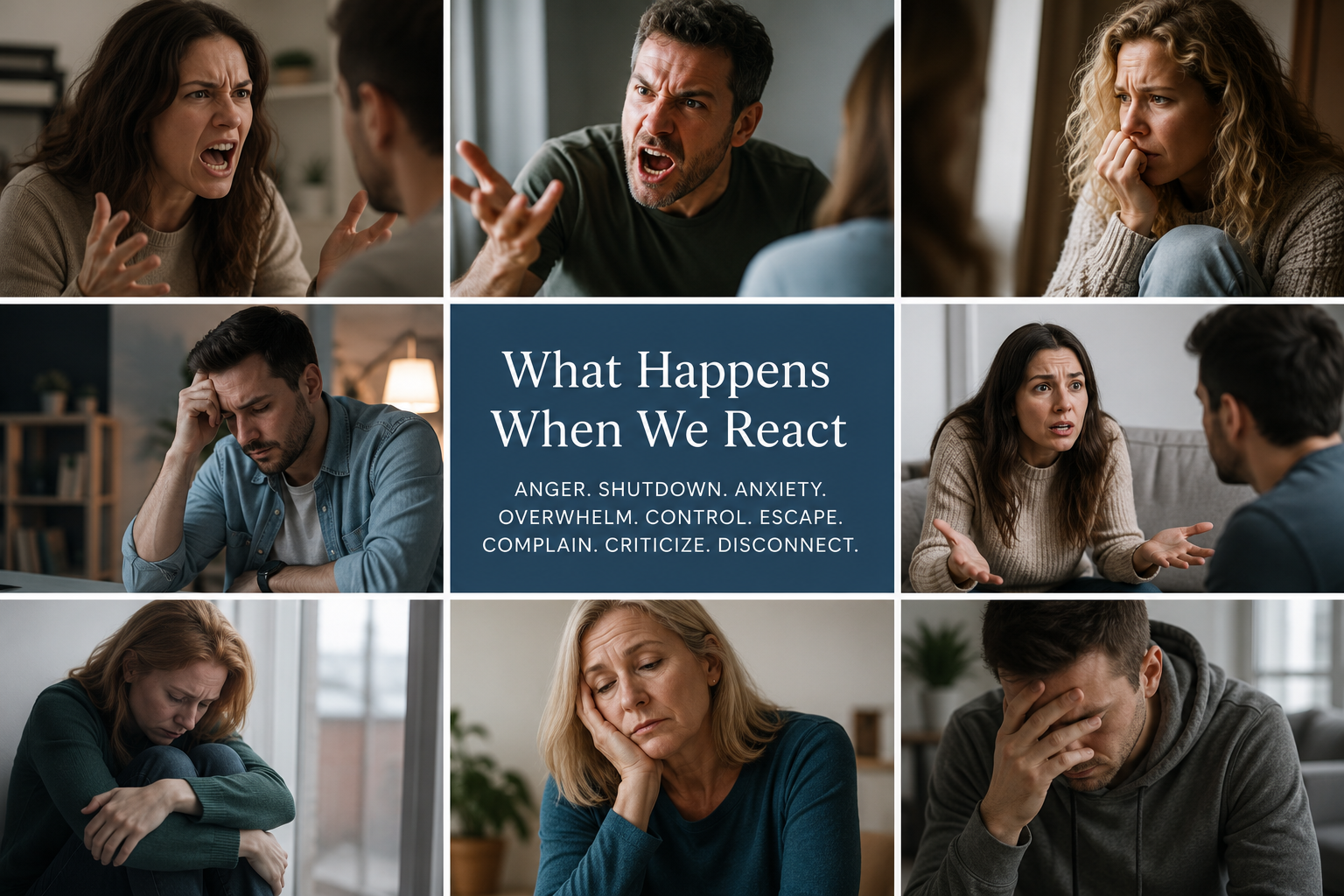
When the nervous system perceives a need for protection, it doesn't wait for permission. It acts.
The anger.
The anxiety.
The urge to leave.
The need to fix, manage, explain, appease, or shut down.
These are not carefully chosen responses. They are impulses arising from a system whose primary job is to keep you safe. This is not a flaw in the system. It is the system doing exactly what it was designed to do.
Differentiating Character From Response
This distinction is worth being precise about.

It is how you treat people when you are present. It is what you value and how you express those values when you have access to yourself. A nervous system response is different. It is what happens before choice becomes available. It is the output of a system drawing on everything it has learned about safety, danger, connection, belonging, and protection. Most people have spent years judging themselves for reactions that were never intended to define them.
And each time a reaction happens, the story grows stronger.
"See? There I go again."
"This is just who I am."
But what if it isn't? What if you've been confusing a protective response with your identity?
The Intelligence Beneath the Reaction
What often gets missed is the intelligence behind these responses. The reactions that create so much frustration today did not appear randomly. They were developed by a nervous system that was paying attention.
Paying attention to what felt safe.
Paying attention to what felt overwhelming.
Paying attention to what worked.
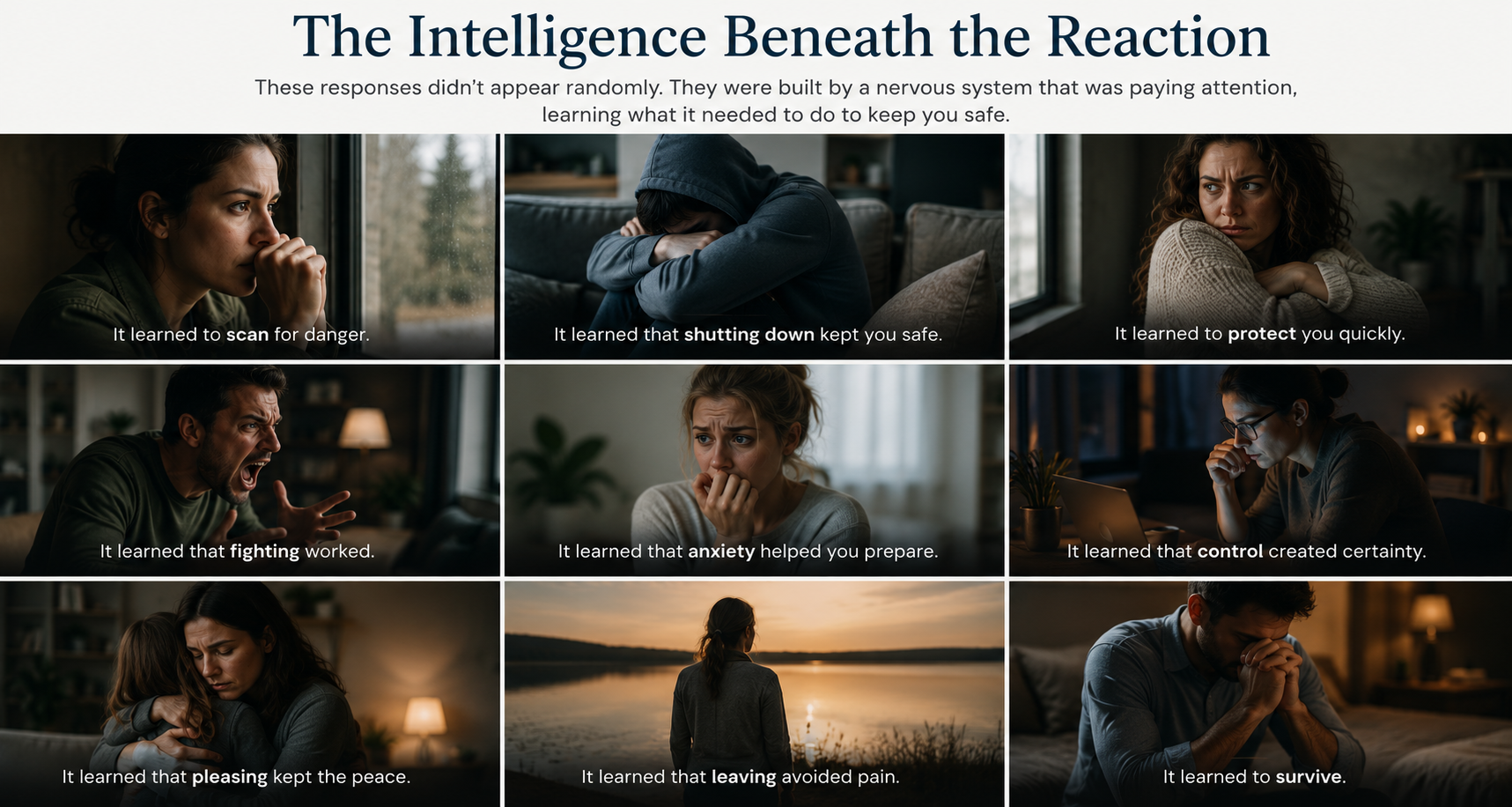
Over time, the nervous system organized itself around those experiences.
The anger that arrives quickly. The anxiety that seems to come out of nowhere. The tendency to disappear, withdraw, or keep everyone else comfortable. These responses may not be serving you now, but they once served a purpose. At some point they helped you navigate an experience, a relationship, an environment, or a moment that required adaptation. The nervous system remembers what helped. And until it learns something different, it continues offering the same solution. Not because it is broken. Because it is intelligent.
The response that is causing difficulty today was often a solution yesterday.
Recognizing that doesn't mean we keep it forever. It simply allows us to approach ourselves with understanding rather than judgment.
A Different Starting Point
When people begin to understand this, something starts to soften.
The story begins to loosen.
"I'm an angry person."
"I'm anxious."
"I can't handle conflict."
"I'm just wired this way."
These stop feeling like permanent truths and start looking more like patterns.
Patterns can be understood.
Patterns can be worked with.
Patterns can change.
This is one of the foundational ideas of The B.L.U.E. Method™
You are not broken. You are patterned.
And when we stop fighting ourselves long enough to understand what the nervous system has been trying to accomplish, we create the possibility for something new.
Not by forcing change.
By creating the conditions for it.
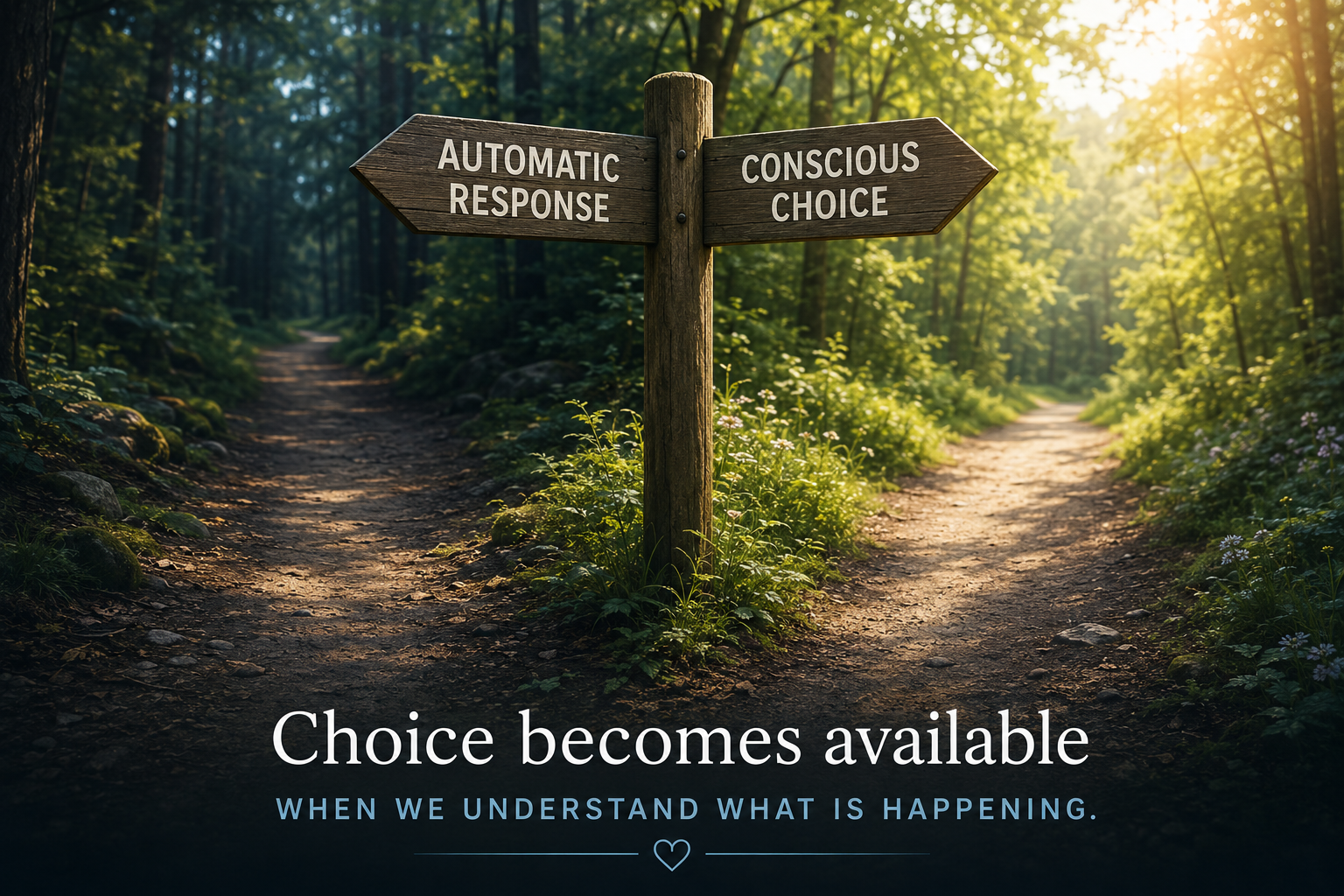
Understanding what is happening is often the first step toward choice.
In our next post, we'll explore the protective patterns of the nervous system and why the reactions that frustrate us most often make more sense than we realize.
Dee Kinsey & Susan Blue
The B.L.U.E. Method™ · Somatic Education for Self-Healing